Still Hope for the Softshell Clam’s Future
Message from the Cap’n is a compilation of fishing advice, waterman and weather insights, Chesapeake lore, and ordinary malarkey from the folks who keep their feet wet in the Potomac and St. Mary’s rivers.
The Cap’n
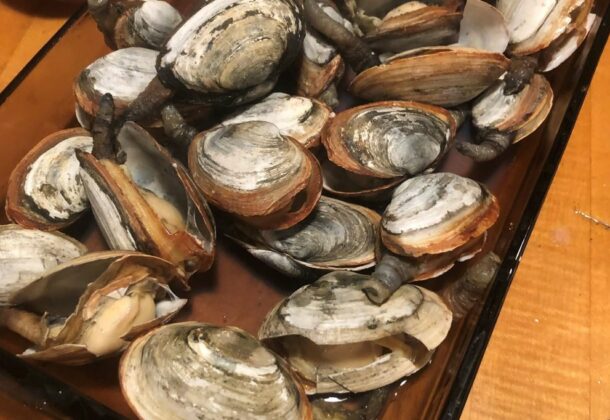
Fifty years ago, according to the Maryland Department of Natural Resources, softshell clams were so plentiful in the Potomac River and Chesapeake Bay that we used them for fish bait or sold them, when we could, for about $2 per basket.
It was no problem at all to go around the edge of the shore with a skiff and blow them out of the sea-bottom using the prop wash from the outboard motor. They were everywhere.
I can remember when the clam boats unloaded their catch at the old torpedo testing range in Piney Point in 1970. (Now the Paul Hall Center.) They loaded a tractor trailer of clams every day the weather permitted, six days a week. If they could not catch 100 bushels of clams by 9am they figured that they weren’t doing anything.
Today, they’re rare as hen’s teeth.
Come to find out, clams were very temperamental creatures that were affected by many factors in the Bay.
Much has changed since then, the greatest devastation to the industry came along with Tropical Storm Agnes in 1972. In addition to the storm, DNR has found a disease, little understood at the time, appeared in 1971 with “devastating effects on the clam populations.”
From 1955 to 1971, an annual average of 460,000 bushels of softshell clams were caught in Maryland. After Tropical Storm Agnes the annual average fell to about 165,000 bushels. Diseases and markets caused fluctuating catches through 1991. The harvests crashed in 1992, since then annually averaging less than 17,000 bushels and less than 4,000 bushels per year over the last decade.
Today, Morgan State University scientists, utilizing Maryland Sea Grant funds, are still working to make softshell clams a viable alternative within the aquaculture setting.
Flashes of natural revitalization of the species generated a renewed market interest in the soft clam, according to an article in the Chesapeake Bay Journal. This led to a hope that the softshell clam could expand Chesapeake Bay shellfish aquaculture industry, and Morgan State is still working on it.
Till next time, remember “It’s Our Bay, Let’s Pass It On.”
To learn about tours and trips into the Chesapeake, keep in touch with Fins + Claws on Facebook. Catch up on Messages from the Cap’n Member Page. Please visit Cap’n Jack’s lore and share with your social media sites. Or reach him at [email protected] or 240-434-1385.